
Leadership
Resilience
Purpose
Featuring a conversation with

David Warm
CEO of the Mid-America Regional Council (MARC), as our inaugural Overcomers Award recipient.
David Warm
David Warm has served as executive director of the Mid-America Regional Council since July 1990. As the council of governments for Greater Kansas City, MARC leads key regional services and planning initiatives and is widely regarded for innovation and effectiveness in areas that include transportation, environmental protection, emergency management, aging and community services, early education, workforce development and local government cooperative services.
Prior to joining MARC, David was the city administrator in Liberty, Missouri, and worked closely with William Jewell on many civic efforts. A native Californian, David earned a B.A. degree in political science and economics from the University of California, Santa Barbara, and a master’s degree in public administration from the University of California, Riverside.
David is also active in many civic and professional groups, including serving on the boards of Park University, Hall Family Foundation, KC Scholars, PREP-KC, Kansas City Design Center and National Academy of Public Administration. He has received several local and national awards. In 2015, he was recognized with a National Public Service Award from the American Society for Public Administration and the National Academy of Public Administration. He was recognized as the 2020 Kansas Citian of the Year by the Greater Kansas City Chamber of Commerce.
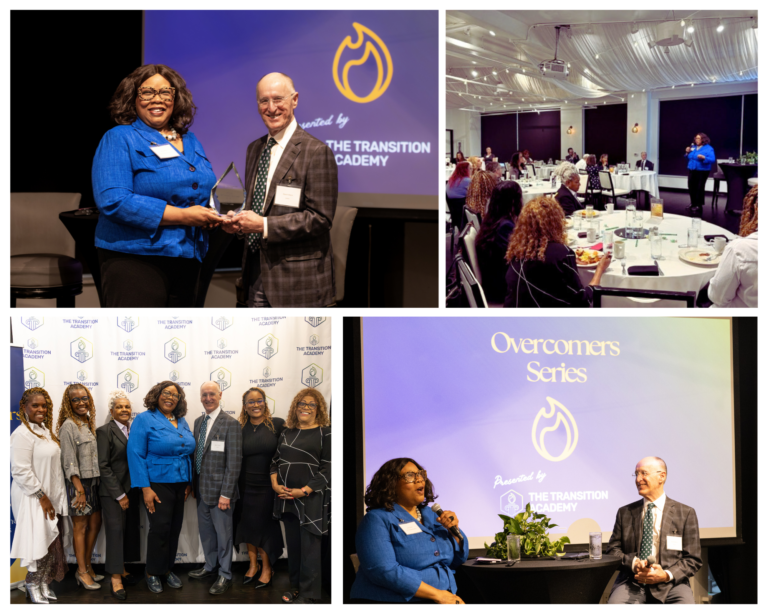


Honor David Warm
“We need to be equally as engaged and committed to creating inclusion and opportunity for everyone.”
-David Warm
Kim Riley
And we started thinking about our dream and our goals for our youth. All of us who are parents, or if we have anyone that we love, we all have a dream for that person. That we want them to achieve their goals.
In spite of whatever their challenges are, we want them to overcome those challenges and to make an impact on society, and most of all, live a life of fulfillment and satisfaction. And so that is where the concept of an overcomer came from. I would like to introduce our man of the hour, Mr. David Warm.
Now when you think about becoming an overcomer, just inevitably having to overcome challenges, talk to me about your experience navigating crisis.
David Warm
And so I think that a real trap for all of us is that we begin with the solution in mind instead of the problem or the opportunity. And if you organize people around what is it we're trying to get done, what is it we're trying to achieve, what is it we're trying to correct, solutions tend to find themselves.
If you come to the table and say, hey, I've got an idea and this is how it needs to be done, you end up spending all your time selling and defending rather than building.
Kim Riley
And David, you've spent so much of your career thinking about Kansas City not simply as individual cities, as institutions, but as a region. And you both were focused on what we can accomplish together.
What is your wish for our region and what do you hope Kansas City becomes in the next chapter?
David Warm
The timing of my leading this role comes at an opportune time. I'm really high on the future of this town. I think, however, one of the things that undermines our ability as a community to come together in total is creating opportunity for everyone. Period. And that's the mission of this organization. And it is part of the mission of MARC, is that we have true gaps in what a young person has an opportunity to achieve in this town.
And we've got so many of you involved in this, but we've got to get serious about doing that. We're doing better in some ways, but we're not doing well enough to make sure that if you're a young person, no matter who you are, and you have ambition, this town will back you one way or another. And I feel like that ethic needs to be the center of our renewed sense of optimism in doing great things as much as attracting big events. That's fun. That's helpful. We need to do it.
But we need to be equally as engaged and committed to creating inclusion and opportunity for everyone.
Kim Riley
So, David, I want to shift gears for a moment because there's another part of your leadership story that I think is particularly important, and it's, of course, very relevant to our work at The Transition Academy. You spent much of your life as a father, and your daughter, Mary, has given you a perspective that isn't something you learned in a boardroom or at a regional planning table.
Can you tell us about Mary and what you've learned from being her father?
David Warm
Being a dad is a great thing. It's been one of the highlights of my life, for sure. We have two daughters. Mary is our second daughter. She's now 35. She has Down syndrome.
And she lives independently. She's an assistant preschool teacher at Ability KC. We didn't raise Mary. This town raised Mary. The community raised Mary. And we never have forgotten that.
She is the product, not of Julie or my household alone. She's the product of the Kansas City, Missouri public schools and charter schools and private schools. And she's the product of church networks and neighborhood networks and soccer clubs and other families and social services and special interventions.
She was raised by the community, and that has really helped a lot. It is the reality of it. I think that that's part of what you're striving to do is create another asset for the community to raise its kids to get good results.
I would also say the other thing that early on, Julie and I were pretty matter-of-fact about when Mary got Down syndrome. When Mary got Down syndrome, we didn't sort of make a deal of it, if you will, and make her special. And I think what that evolved into over time, and Julie was the one who really named this at one point, is that we developed a philosophy of parenting that we were not there to protect Mary but to support her.
And Mary needs support, and she needed guidance and support and help along the way. But she tended to regulate that, and we allowed her and permitted and supported her to do what she chose to do. And rather than a lot of parents with children with disabilities sometimes for good reasons, for loving reasons, try to put boundaries around their children, keep them from getting hurt, keep them from family, keep them from having the opportunities.
And if you're for good motivation, the whole philosophy is a little bit different. It is that Mary, you can do what you choose to do with support. The bottom line is, I think if you support your kids, which is what the mission of The Transition Academy is, rather than protect them, you end up with better results.
And if you lean on the talent to help you do it, you're getting a good result.
Kim Riley
David, when you think about Mary's adult life, what have you learned about the importance of meaningful work and having an opportunity to contribute? And what do you think Kansas City needs to understand about creating those opportunities for people with disabilities?
David Warm
My question in response to that is, what's the alternative? If we do nothing, and we park generations of kids with no opportunity to engage, there's a cost for that.
I mean, clearly there's a human cost, but there's a huge social and economic and community cost. It's a drain on who we are, and it's a drain on our self-esteem, and it's a drain on... it's draining every way. But if we invest, over time, it makes us all richer.
The students who need support are engaging to their fullest ability, they're adding value, and the rest of us have less of a burden and have a more complete and whole community. And so I feel like we have no choice but to do this work. You know, we have no choice but to get this right and make sure that everybody, and when I say everybody, it's not only an economic issue, it is about ability, has an opportunity to achieve what they could achieve.
Kim Riley
Great. Thank you. Thank you.
We would now like to present you with an Overcomers Award.